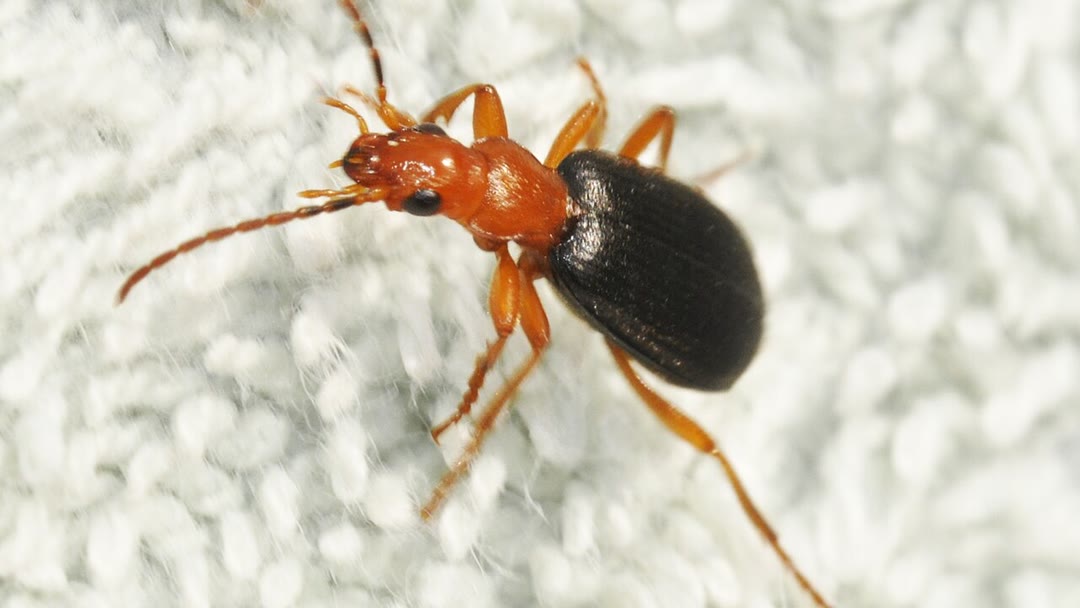
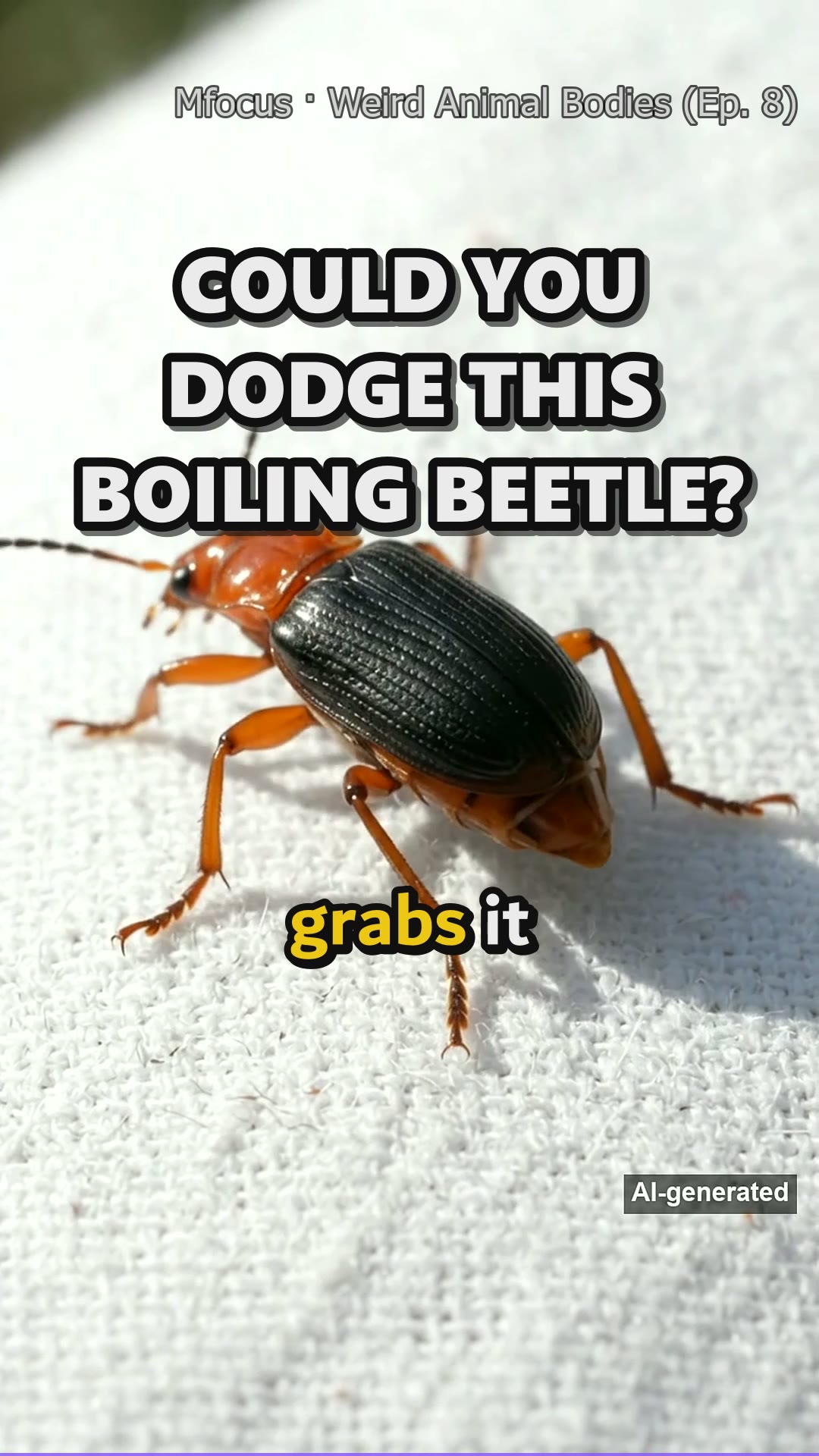
When attacked by a predator, the bombardier beetle fires a near-boiling defensive spray from its rear. It produces this blast by mixing two chemicals inside an internal reaction chamber at the moment of attack.
Mixing under attack
Inside the beetle's abdomen, two separate chemicals are stored until danger strikes. At the moment of attack, the beetle releases them into an internal chamber where they mix together.
Heat and pressure
The chemical reaction heats the liquid almost to boiling. That intense heat quickly builds pressure inside the chamber, which forces the liquid out in a violent jet.
Hundreds of pulses per second
The beetle does not expel the liquid in a continuous stream. Instead, it fires in rapid pulses, hundreds of times a second—roughly 368 to 735 pulses every second. This pulsed discharge may let the chamber walls cool a bit between pulses.
Filmed at 2,000 frames per second
Because the defensive discharge happens so quickly, scientists recorded the spray at 2,000 frames per second. High-speed imaging revealed the rapid sequence of internal pulses that drive the jet.
The short answer
The bombardier beetle mixes two chemicals in an internal chamber when attacked. The reaction heats the liquid almost to boiling, building the pressure that fires a pulsed jet at roughly 368 to 735 pulses per second.
The "cooling chamber" explanation is an interpretation drawn from the sources below.